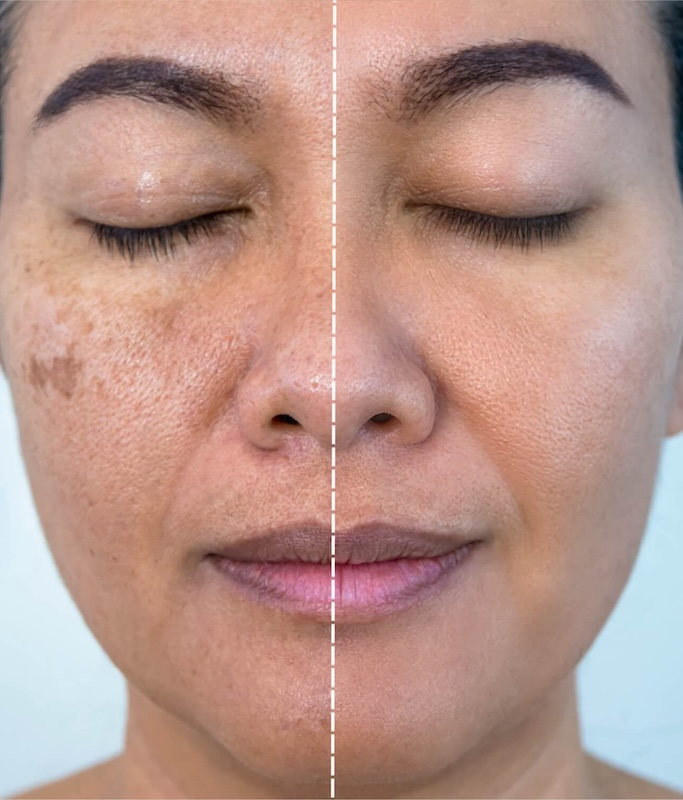
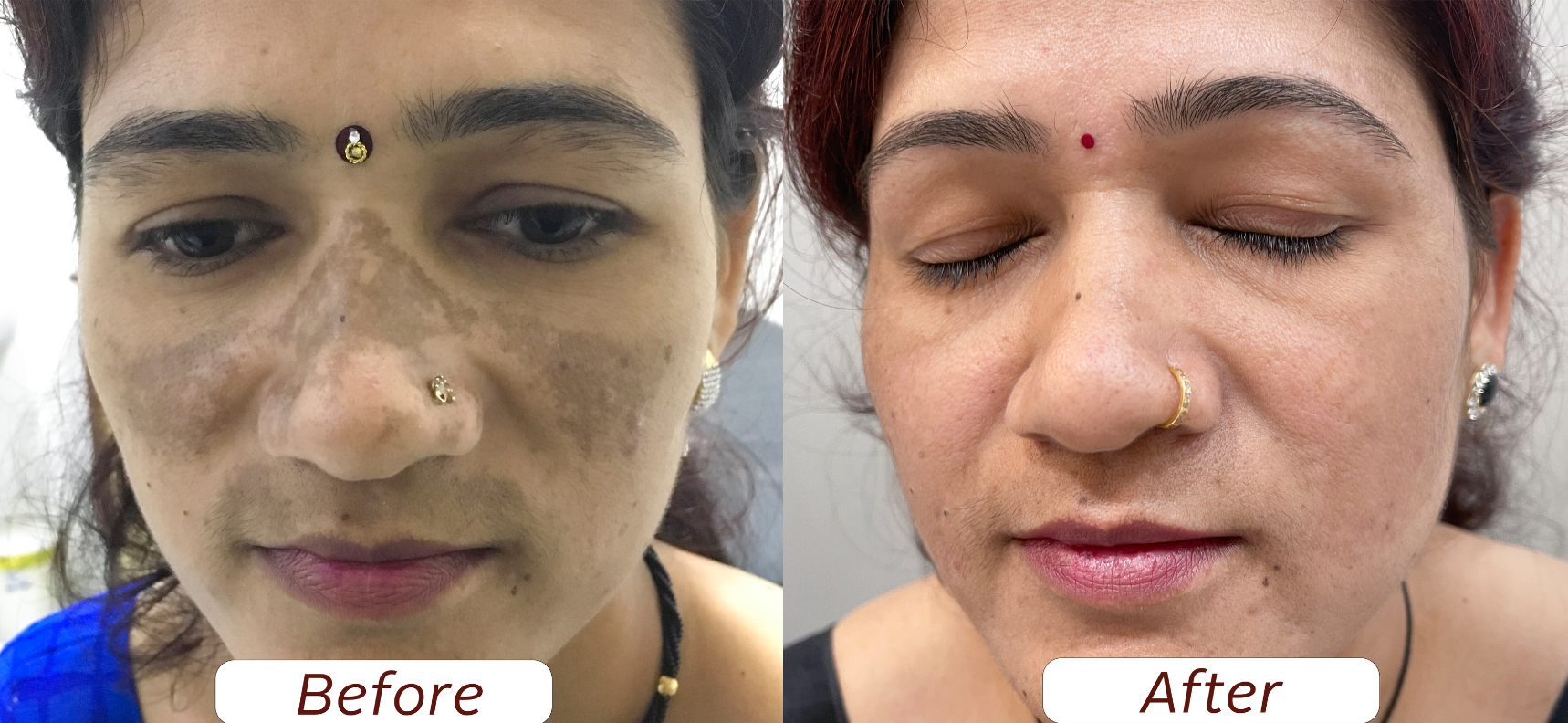
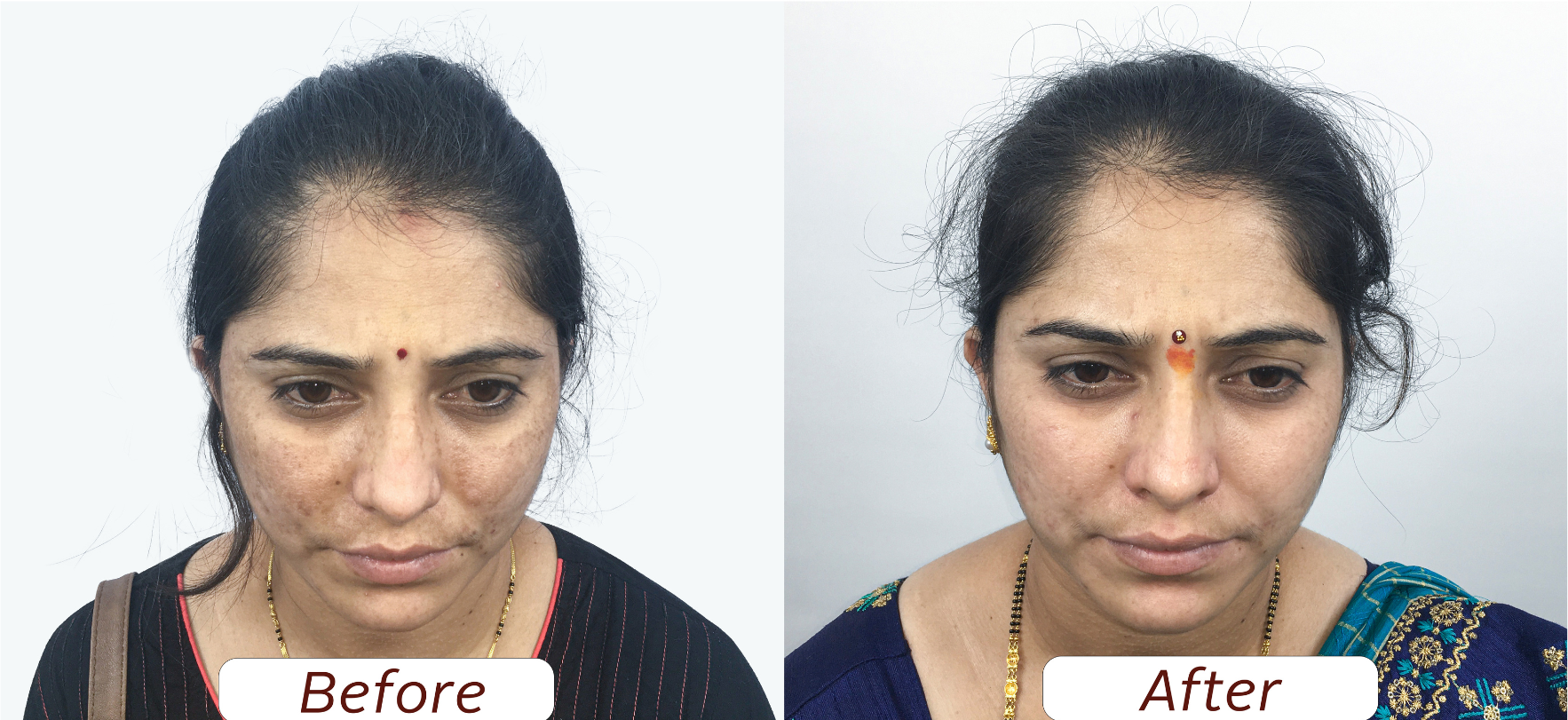
Melasma treatment focuses on safely fading dark, blotchy patches and keeping them from returning. The process starts with identifying triggers such as sun exposure, pregnancy, hormones, heat, and certain medications, since ongoing exposure can quickly worsen pigmentation.
Daily use of a broad-spectrum sunscreen that blocks both ultraviolet and visible light is essential in every treatment plan. Dermatologists typically prescribe topical creams containing ingredients like hydroquinone, triple-combination formulas, azelaic acid, tranexamic acid, kojic acid, niacinamide, and retinoids, which work by slowing melanin production and speeding cell turnover.
For stubborn cases, oral tranexamic acid, superficial chemical peels, microneedling with topicals, or low-fluence lasers and light-based therapies may be added to enhance results while minimising the risk of post-inflammatory darkening. Treatments are usually spaced over weeks to months, with gentle, barrier-supporting skincare to reduce irritation and sensitivity. Because melasma is a chronic, relapsing condition, maintenance creams, strict photoprotection, and avoidance of known triggers are critical to preserve clearer, more even-toned skin long term.